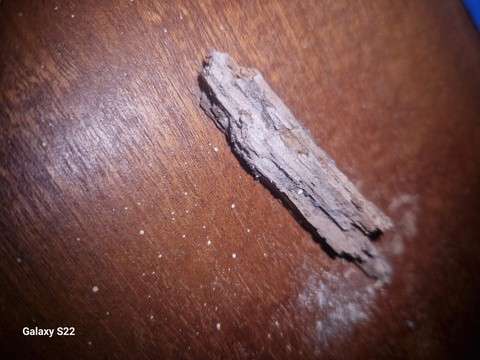
Rising Damp in a Lower Ground Flat on Nevern Square, Earls Court SW5
A lower ground flat on Nevern Square in Earls Court had rising damp in the study, hallway and master bedroom, with water also getting in around the front door and poor drainage in the rear garden.
Project at a Glance
The Brief
The owner asked for a thermal damp survey of the flat to find out where the damp was coming from and what needed doing.
The Survey
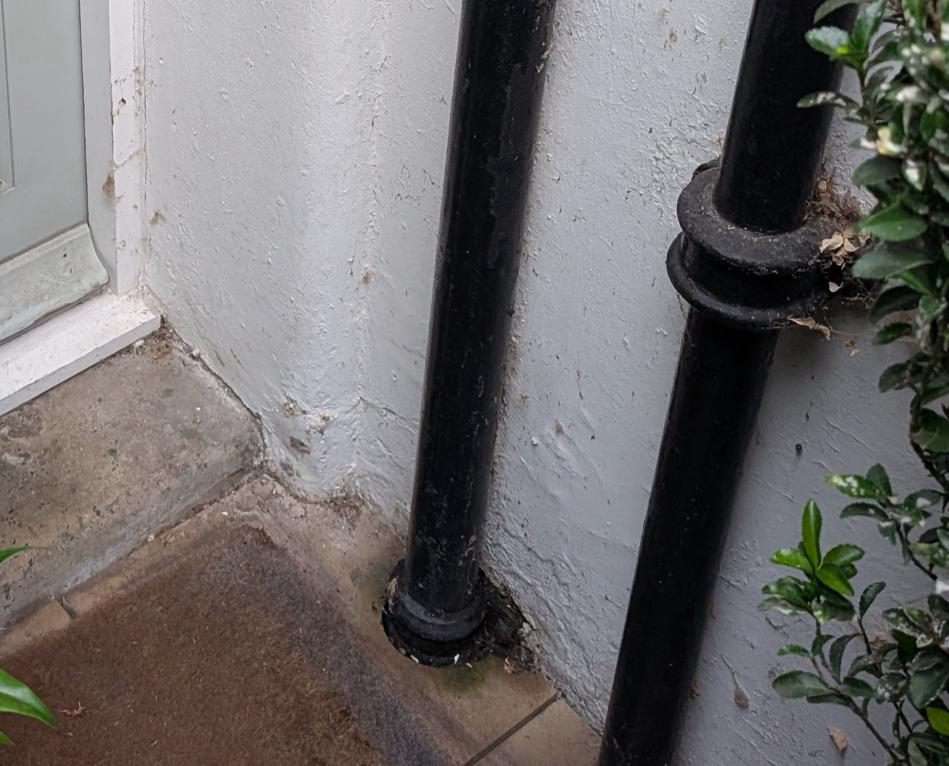
Outside, render at the front obscured the damp proof course and timber cladding did the same at the rear, so its height and condition could not be confirmed. There was no effective seal around the entrance door frame, vegetation was growing against the walls, and the front rainwater downpipe showed signs of leaking, staining the render.
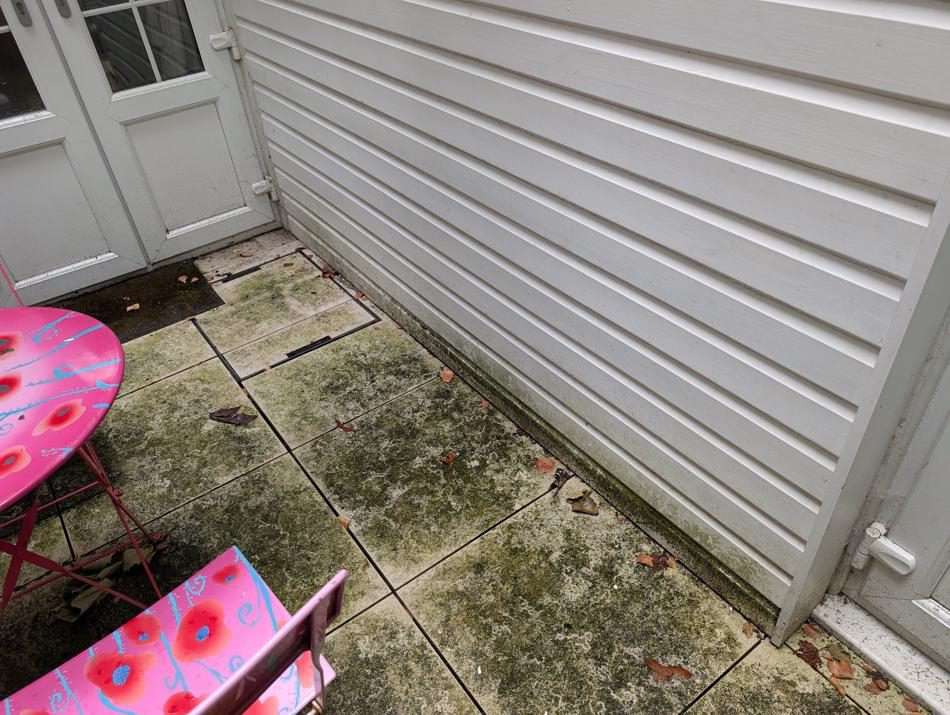
The rear garden had no effective surface water drainage. There was damp staining at the base of the timber cladding from splashback, with moss and algae on the paving nearby.
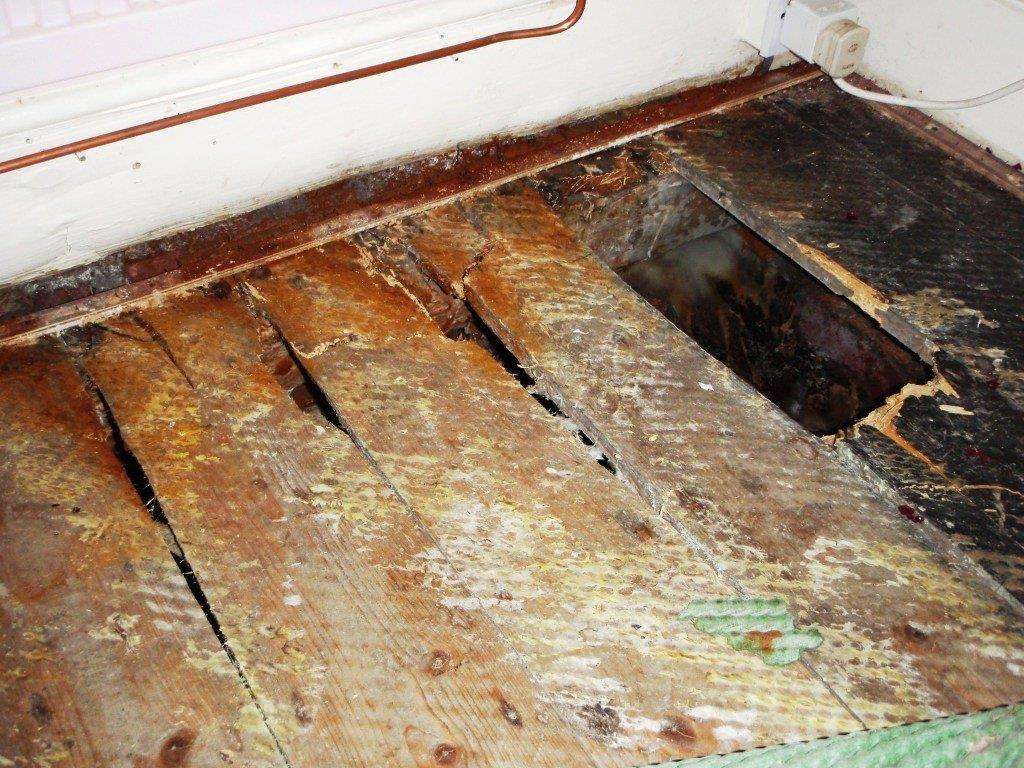
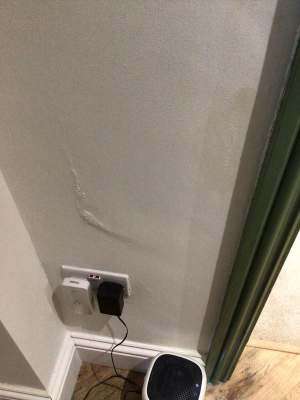
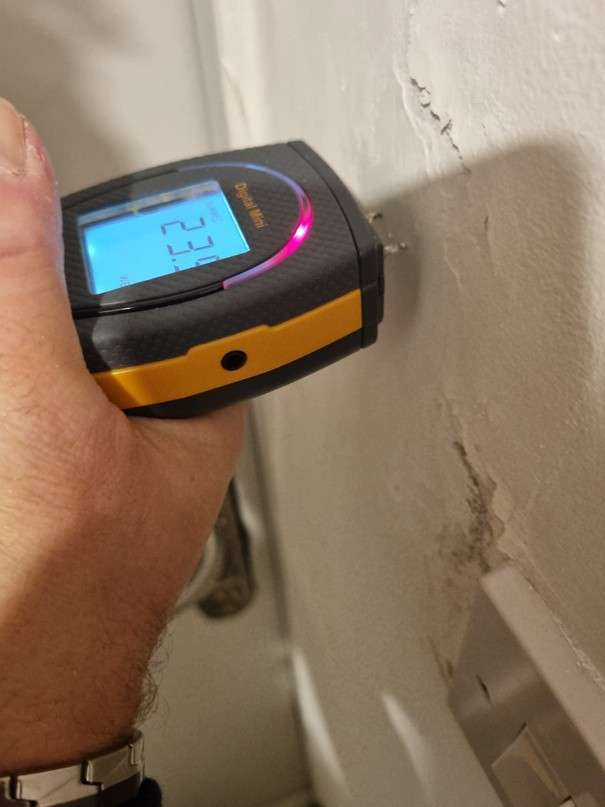
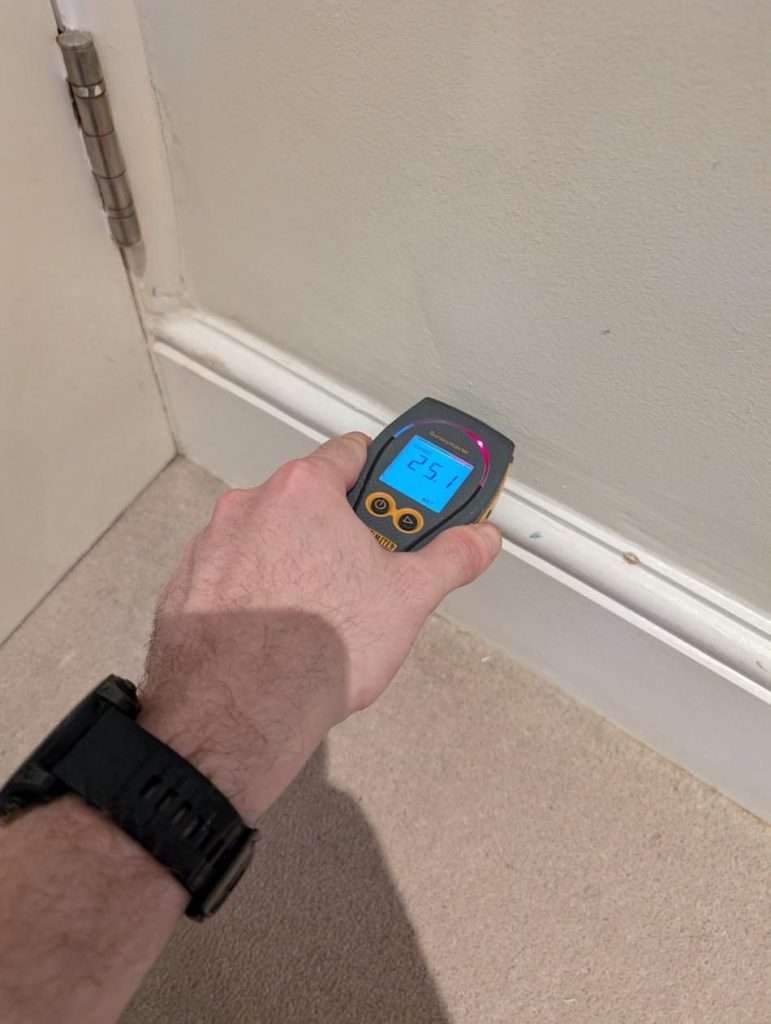
Inside, localised damp was recorded by the front entrance. Multiple areas of rising damp were found in the study and the adjacent hallway, and the master bedroom was also affected, with plaster running down to the floor. A thermal imaging camera was used as part of the inspection.
The Solution
The report recommended:
- Hacking off damp affected plaster to a minimum height of 1.2 metres in the study, hallway and master bedroom.
- Injecting a chemical damp proof course, applying a salt neutralising treatment, then a waterproof render and a smooth skim finish.
- Sealing around the front entrance door frame.
- A French drain at the base of the rear walls to improve surface water dispersal and reduce splashback.
Repairing the leaking downpipe and cutting back vegetation were left for the owner to arrange. See our rising damp treatment page for how this works.
The Work
The work was carried out between 13 and 21 October 2025. Plaster was removed to 1.2 metres, the walls were injected with a chemical DPC, treated with salt neutraliser and rendered, then finished with skim plaster. A trench was dug to 150mm at the rear and a 100mm perforated pipe laid and backfilled with gravel. The owner was advised to have the rear garden redesigned for better drainage, but chose this more limited solution. Sealant was applied around the front door.
The Result
The affected walls now have a working damp proof course and salt resistant render, and the rear walls have a drainage channel to take surface water away. See our page on damp proofing in Kensington and Chelsea.
Frequently Asked Questions
Why do lower ground flats get rising damp?
Walls at or below garden level are in constant contact with damp ground, so a missing or failed damp proof course lets moisture rise into the plaster.
Why replaster with a waterproof render after a DPC injection?
Old plaster holds salts from the damp. A salt neutraliser and waterproof render stop them drawing moisture back to the surface.
What does a French drain do?
A gravel filled trench with a perforated pipe collects surface water at the base of a wall and carries it away, reducing splashback.
Damp in a lower ground flat?
Our CSSW and CSRT trained surveyors find the real cause before recommending any work. Non-invasive survey with a clear written report. No obligation.
Survey carried out by Matt Jewell at Advanced Damp. Project completed in Earls Court, SW5.

Sam Fitzgerald is the founder of Advanced Damp and a working damp and structural waterproofing surveyor diagnosing and treating moisture problems in residential and commercial properties across London and the South East. He is FODCS certified (a Federation of Damp Certified Surveyor) and a member of the Federation of Damp. His hands-on work covers rising damp, penetrating damp, condensation, basement waterproofing to BS 8102, and thermal imaging surveys, and he has personally completed over 400 damp surveys across properties of every type and age. Everything he writes draws directly from jobs he has carried out. He does not write about treatments, products or causes he has not dealt with first-hand in the field.