Black Mould and Condensation in a First Floor Flat on Glendall Street, Brixton SW9
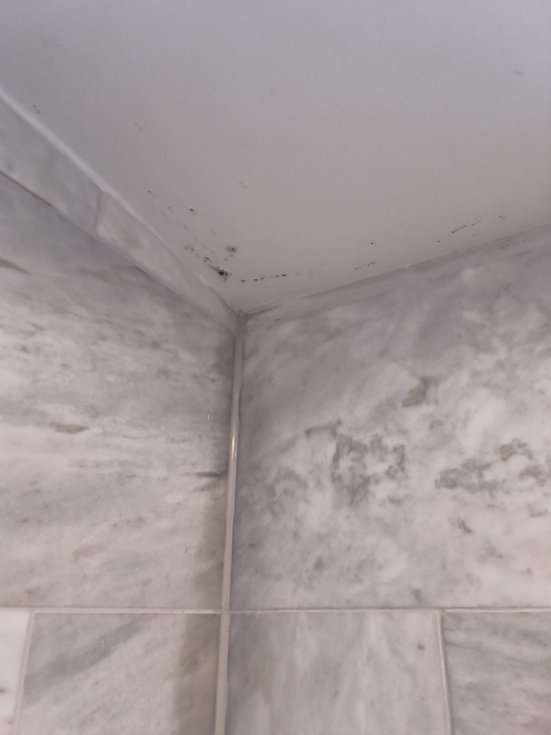
A first floor flat on Glendall Street in Brixton became humid every winter, with black mould on the walls. The occupant was running a dehumidifier constantly just to keep on top of it.
Project at a Glance
The Brief
The flat sits at the end of a terrace with an overground railway on one side. The occupant felt heat was coming from the neighbouring houses and condensing on the uninsulated end wall.
The Survey
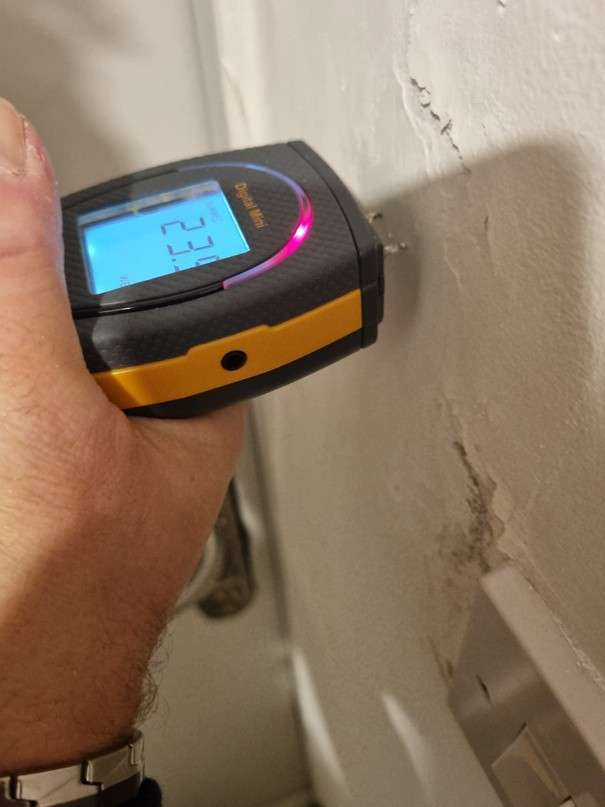
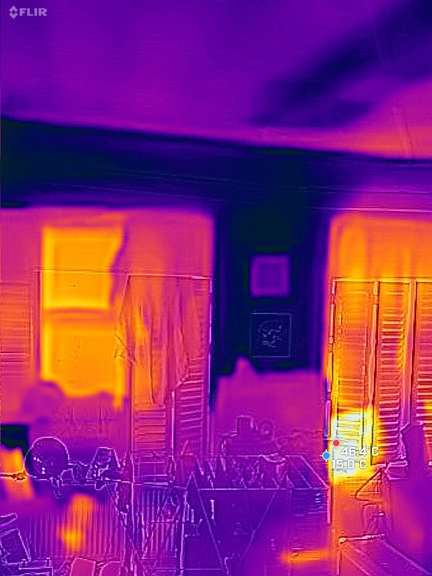
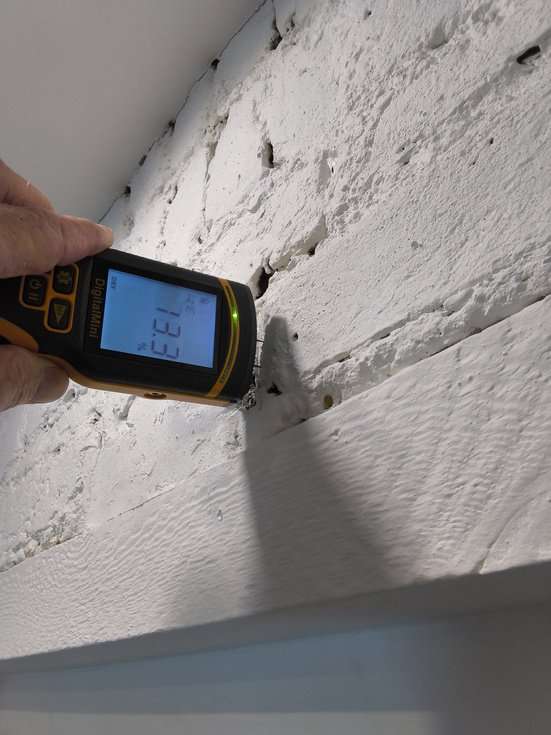
The inspection used thermal imaging, moisture profiling and environmental readings. There was no evidence of penetrating damp. Internal temperatures were 17.4 to 17.9 C with humidity of 46.5 to 52 percent, which is normal on its own.
Thermal imaging, however, showed significant cold bridging on the external walls, with surface temperatures as low as 13 C at window reveals, lintels and ceiling edges. Those surfaces sit close to the dew point in cold weather, so condensation forms readily. Limited heating, restricted ventilation and stored items blocking airflow were adding to it.
The Solution
The report set out priorities:
- Ventilation: a humidity controlled extractor fan in the bathroom and a positive input ventilation unit in the living room.
- Heating: steady background heating of 18 to 22 C.
- Isotherm insulation and a skim finish on the cold external walls.
The Work
Advanced Damp carried out the Isotherm wall insulation and associated electrical works from 1 to 4 June 2026.
The Result
Warming the coldest wall surfaces tackles the reason the black mould kept coming back, instead of just cleaning it off each winter. End of terrace flats around Brixton and Stockwell often have the same cold wall problem. See our page on damp proofing in Brixton.
Frequently Asked Questions
Why does mould keep coming back on the same wall?
It usually means that wall is colder than the rest of the room. Moisture in the air condenses there first, and mould follows.
What does thermal imaging show in a damp survey?
It shows surface temperatures, so cold spots and thermal bridges that attract condensation can be found without opening up walls.
What is positive input ventilation?
A PIV unit gently pushes filtered air into the home, which helps move moist air out and lowers condensation.
Black mould every winter?
Our CSSW and CSRT trained surveyors find the real cause before recommending any work. Non-invasive survey with a clear written report. No obligation.
Survey carried out by Lionel Sewell (FODCS) at Advanced Damp. Project completed in Brixton, SW9.

Sam Fitzgerald is the founder of Advanced Damp and a working damp and structural waterproofing surveyor diagnosing and treating moisture problems in residential and commercial properties across London and the South East. He is FODCS certified (a Federation of Damp Certified Surveyor) and a member of the Federation of Damp. His hands-on work covers rising damp, penetrating damp, condensation, basement waterproofing to BS 8102, and thermal imaging surveys, and he has personally completed over 400 damp surveys across properties of every type and age. Everything he writes draws directly from jobs he has carried out. He does not write about treatments, products or causes he has not dealt with first-hand in the field.