 Approved member of the Federation of Damp

Below-ground waterproofing specialists · Islington, N1, N5, N7
Basement Waterproofing in Islington
Islington is full of Georgian and early Victorian terraces with lower ground floors, lightwells and vaults running out under the pavement. Advanced Damp designs and installs basement waterproofing for these properties across N1, N5 and N7, from single vault conversions to full lower ground floor refurbishments.
Newton Approved
Below-ground waterproofing across London and the South East.
CSSW and CSRT Trained Surveyors
Systems designed and specified to BS 8102:2022.
Long-Term Guarantee
Written guarantee on all new waterproofing installations.
CHAS Accredited
Fully insured, fixed-price quotations after survey.
Why Islington Basements Get Wet
Most of Islington sits on London Clay, a dense, slow draining clay that holds water against anything buried in it. In parts of the borough, especially towards the south and east, patches of river terrace gravel sit on top of that clay. Rainwater soaks quickly through the gravel, reaches the clay and then has nowhere to go, so it sits at the level of your basement walls and floor.
The bigger factor in Islington is how the houses were built. The squares and terraces of Barnsbury, Canonbury, Highbury and De Beauvoir were laid out between the late 1700s and the 1860s. Most were designed with a lower ground floor set a few feet below the street, a front lightwell, and brick vaults extending under the pavement for coal and storage. None of this was built to keep water out. The walls are solid brick, often only one and a half bricks thick, with no membrane and a lime mortar that wicks moisture freely.
The vaults are usually the worst affected area. They sit directly under the public footpath, so every leaking gully, cracked paving slab and failed pavement light feeds water straight into the vault ceiling and walls. Converting them into a utility room, wine store or extra living space only works with a proper waterproofing design.
Islington also has the New River, the early 17th century channel that once carried drinking water from Hertfordshire through Canonbury and on to Clerkenwell. Much of it is now piped or filled in, but the old course and the Regent's Canal mean some streets sit close to made ground and historic water courses, where ground conditions vary from one end of a terrace to the other.
Islington Council expects new basements and significant basement extensions to be supported by proper structural and drainage information, and many of the borough's streets are in conservation areas. Our surveys and system designs are written so they can go straight to your architect, structural engineer or planning consultant.
Why Islington Basements Need It
Islington lower ground floors take on water from three directions: through the clay behind the walls, down from the pavement above the vaults, and up through the original solid floors. Common local risk factors include:
Left untreated, this sustained moisture pressure leads to efflorescence and salt staining, plaster breakdown, mould growth, timber decay in ground-floor joists and, over time, structural deterioration of the masonry itself.
Our Waterproofing Systems
Islington's London Clay holds water against basement walls for most of the year, and the vaults take extra water from the pavement above. We specify systems that collect and remove that water rather than simply coating over it. A survey decides which system is right for your property.
Type A · Cementitious Tanking
A rigid bonded coating applied directly to sound masonry. Suited to Islington cellars with stable brickwork and lower moisture risk storage spaces, plant rooms and vaults where full habitable conversion is not required.
Basement tanking →Type C · Cavity Drain Membrane
Our most specified system for N1. A studded membrane channels groundwater safely to a sump rather than resisting it. the reliable choice where sustained hydrostatic pressure makes blocking water impractical.
Cavity drain membrane →For new basement excavations or projects requiring Camden planning submissions, see our work on structural waterproofing and cellar tanking.
How We Work
Groundwater & Assessment
A CSSW surveyor visits your Islington property, identifies the water source, and reviews any previous failed treatments before recommending a system.
System Design & Fixed Price
We specify the right system for N1's groundwater conditions to BS 8102:2022 and provide a clear, fixed-price proposal agreed before any work begins.
Installation & Guarantee
Our own teams install the system, no subcontracting. On completion, we issue a written long-term guarantee and advise on long-term sump maintenance.
Why Choose Advanced Damp in Islington?
What Our Customers Say
"Lionel the surveyor arrived on time and was very courteous and thorough. He discussed everything that needed doing and was able to reassure us during a very stressful time. He explained everything clearly, took the stress out of it, and sent a full report including photos. I would absolutely recommend Advanced Damp."
Jo Windsor, Trustpilot"I had two other damp surveys on my home and they were only using a basic meter. Matt was far more thorough, a real professional. I'm so grateful to have dealt with someone who actually understood the problem."
Michael John, Google ReviewsPlanning work on a basement in Islington?
The right system depends on how water reaches your walls and floor. A survey finds that first, so the design fits your property and the price is fixed before anything starts.
Book a Basement SurveyCall 0300 373 7251- 1. Book online or callPick a time that suits you.
- 2. Surveyor visitsMoisture readings, water source and the condition of the walls and floor.
- 3. Written specificationThe right system for your basement, with a fixed price and no obligation.
A Real London Type C Project
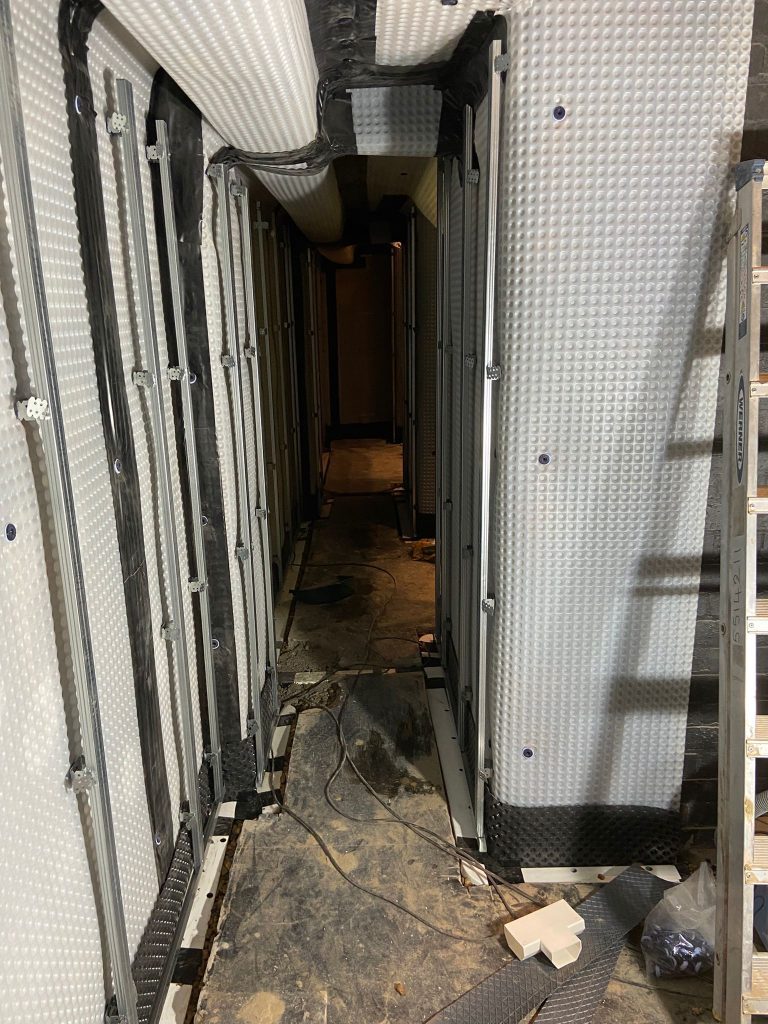
Basement Waterproofing Project in Fulham
See how our team successfully designed and installed a complete basement waterproofing system for a residential property in Fulham. This project highlights our risk-led approach, high-quality workmanship, and long-term waterproofing solutions for London homes.
Basement Waterproofing Across London
We design and install basement waterproofing across London and Surrey. Choose your area for local ground conditions, common problems and FAQs.
Accredited & Trusted
Islington Basement Waterproofing FAQs
Can you waterproof the vaults under the pavement outside my Islington house?
Yes. Pavement vaults are one of the most common jobs we see in Islington. They usually need a cavity drain membrane on the walls and ceiling with the water directed to a drainage channel or sump, because the pavement above will always let some water through. We check the condition of the brick arches and any pavement lights first.
Is my Islington lower ground floor a basement for waterproofing purposes?
If any part of the room sits below the outside ground level, it is treated as below ground under BS 8102. That covers almost every Islington lower ground floor, including the front rooms that sit below the pavement and the rear rooms set into the garden.
Will standard damp proofing work on an Islington lower ground floor?
Usually not. A chemical damp proof course stops moisture rising up a wall, but it does nothing against water pushing sideways through a wall that has soil and clay behind it. Below ground walls need a waterproofing system designed for that pressure.
Do I need planning permission to waterproof my existing basement?
Waterproofing an existing cellar or lower ground floor is normally treated as internal works. Digging a new basement or lowering the floor is different and usually needs planning permission, building regulations approval and often a party wall agreement. Listed buildings need listed building consent for most changes, so check before any work starts.
How long does a basement waterproofing job take in Islington?
A single vault or small cellar can take a few days. A full lower ground floor flat usually takes one to three weeks for the waterproofing, depending on access through the property and the condition of the walls once the old plaster is removed.
Can you work in a lower ground floor flat in a converted Islington house?
Yes. Many of our Islington jobs are in lower ground floor flats. We plan access, dust control and waste removal around the shared entrance, and agree working hours so neighbours in the flats above are not disturbed more than necessary.
Related Services
Book an Islington Basement Waterproofing Survey
If your Islington property has a vault, cellar or lower ground floor showing damp, salts or water, the first step is a survey by a CSSW and CSRT trained specialist who knows how Islington terraces were built.
We will assess your specific building, identify the source and type of water ingress, and specify the right system in writing with a fixed price.
Recent Basement Work Near Islington
Our recent basement waterproofing work includes vault to dry pantry, Canonbury N1; lower ground stairwell, Islington N1 and basement bedroom, Notting Hill W11. Each case study sets out what the survey found and how the problem was fixed.
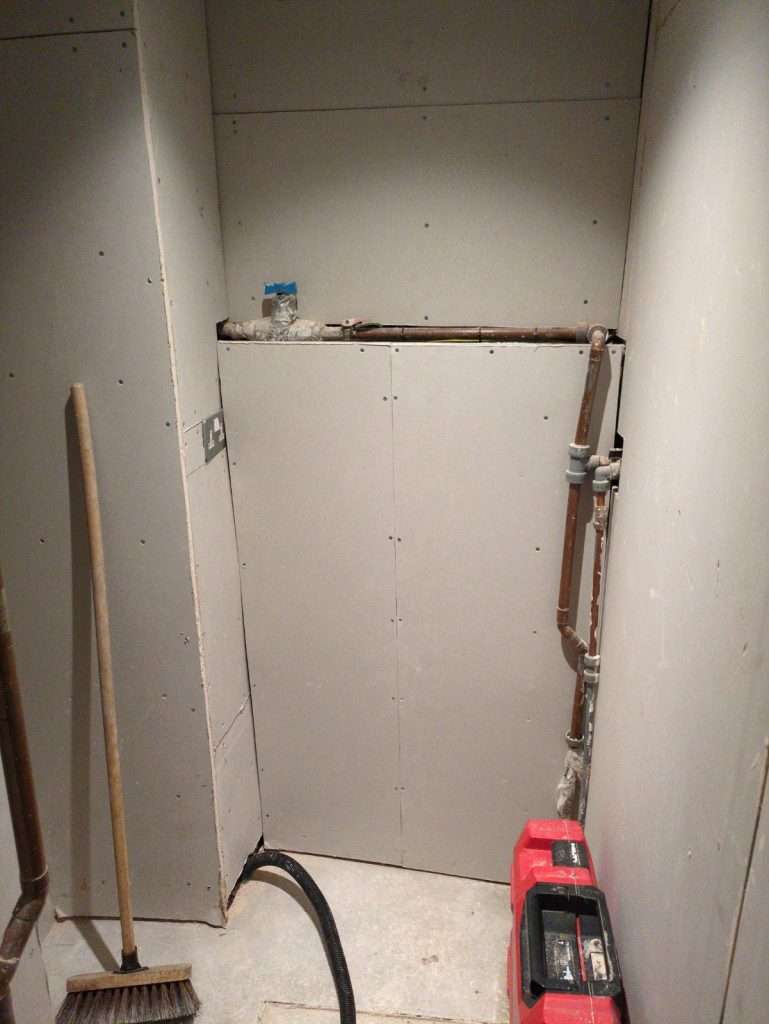
Vault to dry pantry, Canonbury N1
An unprotected lower ground floor vault waterproofed with a Type C cavity drain membrane, perimeter drainage and a dual pump sump, ready to use as a pantry.
Read the case study →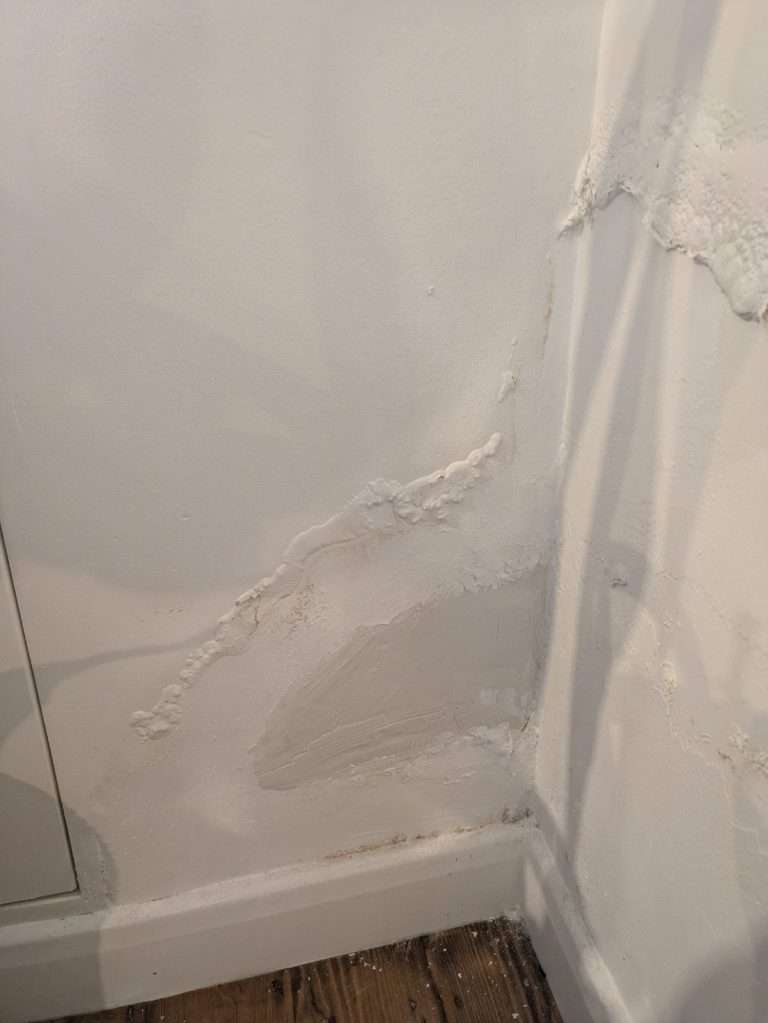
Lower ground stairwell, Islington N1
A new damp patch linked to high ground and poor rear drainage. Localised membrane repair to the marked areas.
Read the case study →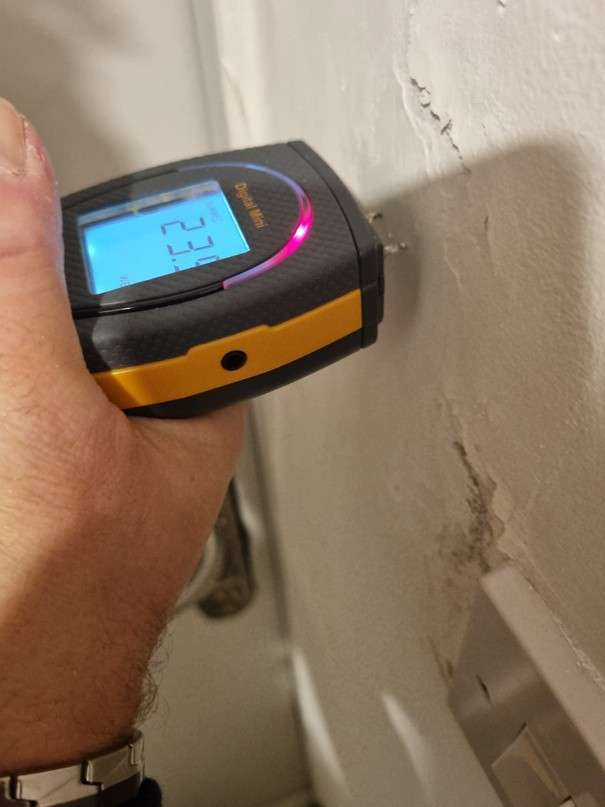
Basement bedroom, Notting Hill W11
Rising damp on two walls and damp below the stairs, treated with DPC, tanking slurry and waterproof render.
Read the case study →