 Approved member of the Federation of Damp

Below-ground waterproofing specialists · Highgate, N6
Basement Waterproofing in Highgate
Highgate sits on one of the highest hills in London, and its basements deal with water that comes down the hill rather than up from below. Advanced Damp designs and installs basement waterproofing for Highgate homes across N6, from Georgian cellars in the village to new basements under hillside gardens.
Newton Approved
Below-ground waterproofing across London and the South East.
CSSW and CSRT Trained Surveyors
Systems designed and specified to BS 8102:2022.
Long-Term Guarantee
Written guarantee on all new waterproofing installations.
CHAS Accredited
Fully insured, fixed-price quotations after survey.
Highgate Is a Hill That Holds Water
Highgate shares its geology with Hampstead across the Heath. The top of the hill is capped with sandy and gravelly layers that sit on top of thick London Clay. Rain soaks into the sand, cannot pass through the clay below, and comes out of the hillside as springs where the two meet. Those springs are the reason the Highgate Ponds exist, and they were among the sources of the River Fleet.
For a basement in Highgate, this means water often arrives sideways. Houses on Highgate West Hill, Swain's Lane, Southwood Lane and the streets falling away towards Archway and Crouch End are built into a slope. Their rear walls hold back the hillside, and after heavy rain the water moving through the upper soil presses against those walls for days.
The building stock is mixed. The village core has Georgian and early Victorian houses with brick cellars that were used for coal and storage. Further down the hill there are large Victorian and Edwardian family houses, many with a lower ground floor at garden level. More recent projects have added full basements under gardens and side extensions. Each of these needs a different waterproofing approach, and the old cellars almost never have any protection at all.
Ground conditions also change over short distances. A house near the top of the hill may sit in sand that drains well, while a house a few hundred metres down sits in clay where the water collects. A neighbour's dry basement does not mean yours will stay dry, which is why we survey every property individually rather than applying a standard specification.
Highgate is split between the London Boroughs of Camden and Haringey, and much of it is in conservation areas. Camden in particular requires a Basement Impact Assessment for new basements. We design waterproofing to BS 8102 and provide the drawings and specification your engineer or planning consultant needs.
Why Highgate Basements Need It
Highgate basements are exposed to spring water moving through the hillside as well as surface water from steep gardens and driveways. Common local risk factors include:
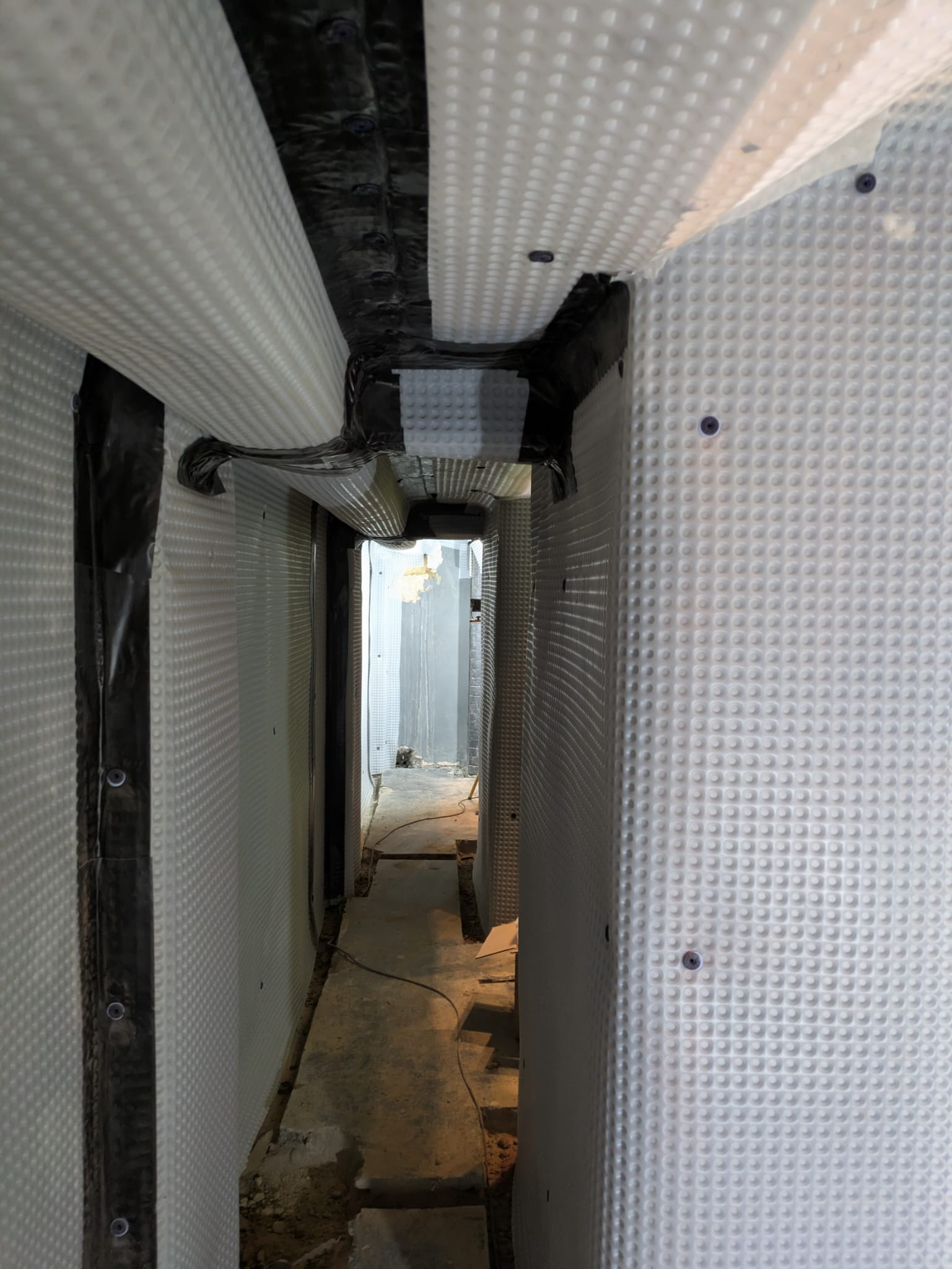
Left untreated, this sustained moisture pressure leads to efflorescence and salt staining, plaster breakdown, mould growth, timber decay in ground-floor joists and, over time, structural deterioration of the masonry itself.
Our Waterproofing Systems
Highgate's spring line means basement walls can see water pressure long after the rain has stopped. We specify systems that collect and remove that water rather than simply coating over it. A survey decides which system is right for your property.
Type A · Cementitious Tanking
A rigid bonded coating applied directly to sound masonry. Suited to Highgate cellars with stable brickwork and lower moisture risk storage spaces, plant rooms and vaults where full habitable conversion is not required.
Basement tanking →Type C · Cavity Drain Membrane
Our most specified system for N6. A studded membrane channels groundwater safely to a sump rather than resisting it. the reliable choice where sustained hydrostatic pressure makes blocking water impractical.
Cavity drain membrane →For new basement excavations or projects requiring Camden planning submissions, see our work on structural waterproofing and cellar tanking.
How We Work
Groundwater & Assessment
A CSSW surveyor visits your Highgate property, identifies the water source, and reviews any previous failed treatments before recommending a system.
System Design & Fixed Price
We specify the right system for N6's groundwater conditions to BS 8102:2022 and provide a clear, fixed-price proposal agreed before any work begins.
Installation & Guarantee
Our own teams install the system, no subcontracting. On completion, we issue a written long-term guarantee and advise on long-term sump maintenance.
Why Choose Advanced Damp in Highgate?
What Our Customers Say
"We had damp proofing work carried out recently and I'm really pleased. The team were friendly, professional and explained everything clearly before starting. Work was done efficiently and the property left clean and tidy. The issue now seems completely resolved."
Charlotte, Trustpilot"Really happy with the service. Sam carried out a survey on our property and was very thorough, delivered the report within the same day after being told it could take up to 5 days. Excellent."
Reuben Callan, Google ReviewsPlanning work on a basement in Highgate?
The right system depends on how water reaches your walls and floor. A survey finds that first, so the design fits your property and the price is fixed before anything starts.
Book a Basement SurveyCall 0300 373 7251- 1. Book online or callPick a time that suits you.
- 2. Surveyor visitsMoisture readings, water source and the condition of the walls and floor.
- 3. Written specificationThe right system for your basement, with a fixed price and no obligation.
A Real London Type C Project
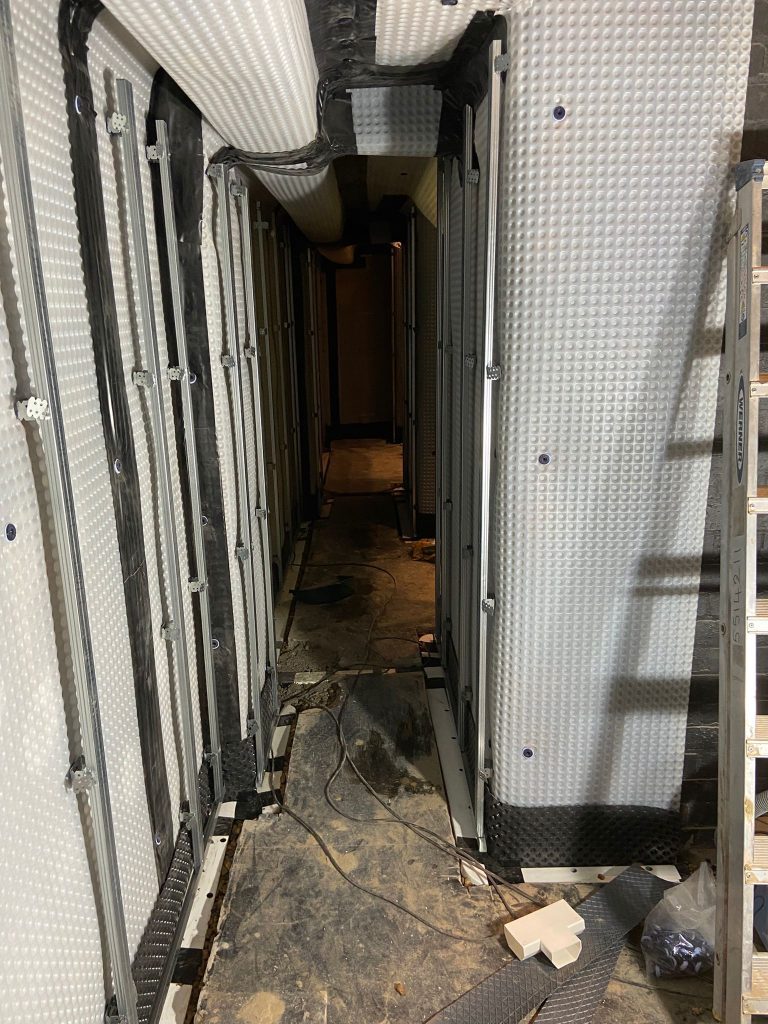
Basement Waterproofing Project in Fulham
See how our team successfully designed and installed a complete basement waterproofing system for a residential property in Fulham. This project highlights our risk-led approach, high-quality workmanship, and long-term waterproofing solutions for London homes.
Basement Waterproofing Across London
We design and install basement waterproofing across London and Surrey. Choose your area for local ground conditions, common problems and FAQs.
Accredited & Trusted
Recent Basement Work Near Highgate
Our recent basement waterproofing work includes vault to dry pantry, Canonbury N1; lower ground stairwell, Islington N1 and basement bedroom, Notting Hill W11. Each case study sets out what the survey found and how the problem was fixed.
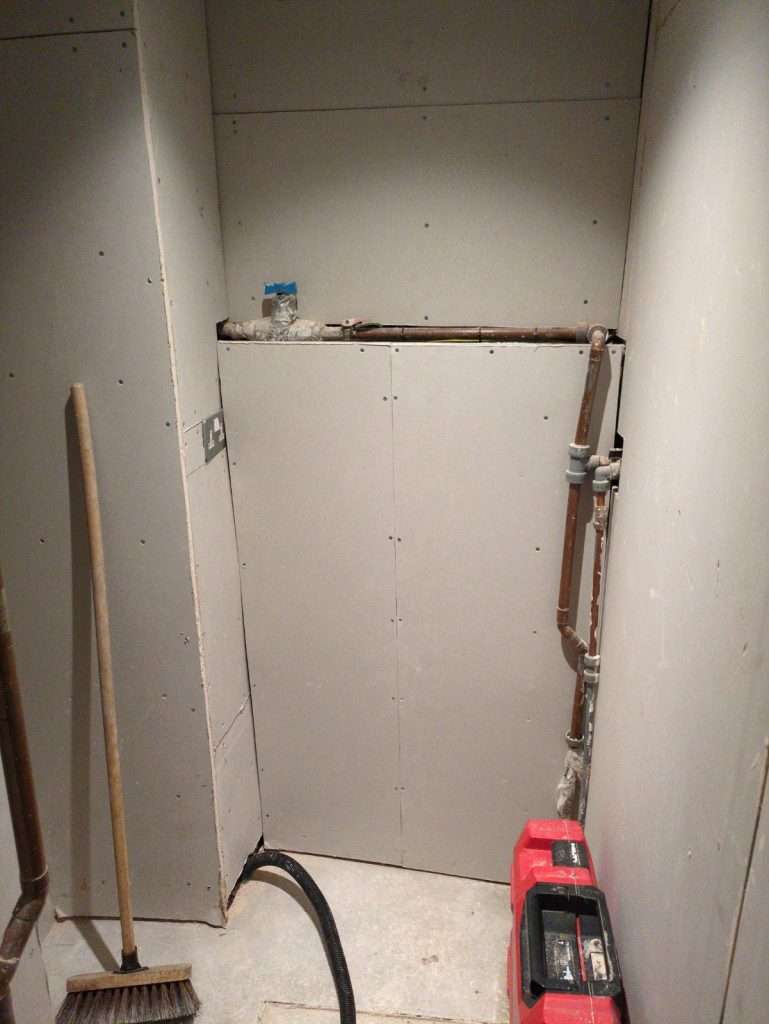
Vault to dry pantry, Canonbury N1
An unprotected lower ground floor vault waterproofed with a Type C cavity drain membrane, perimeter drainage and a dual pump sump, ready to use as a pantry.
Read the case study →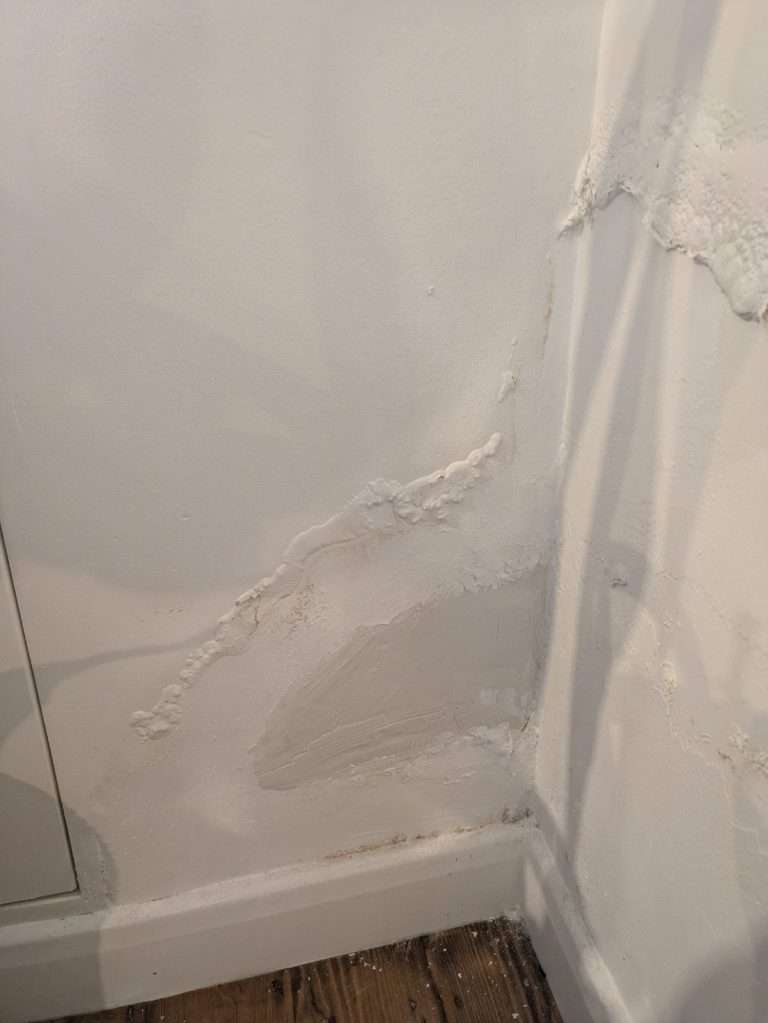
Lower ground stairwell, Islington N1
A new damp patch linked to high ground and poor rear drainage. Localised membrane repair to the marked areas.
Read the case study →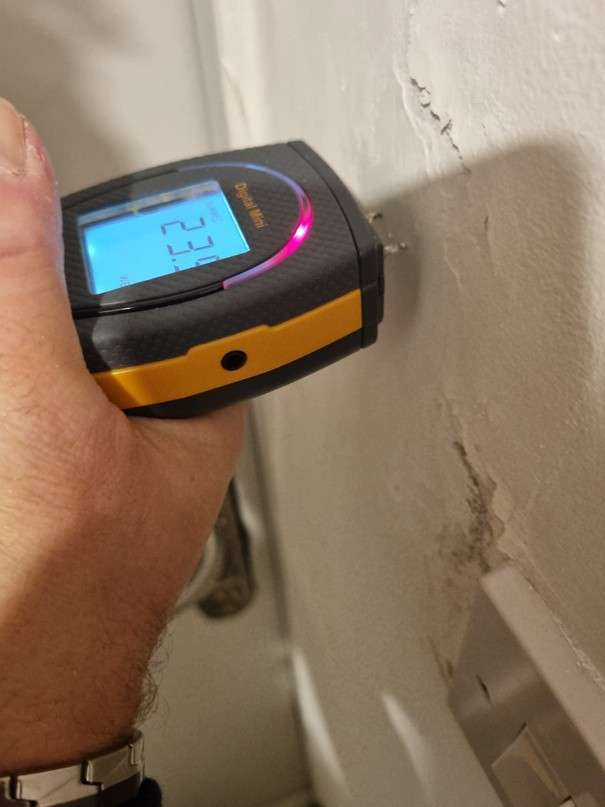
Basement bedroom, Notting Hill W11
Rising damp on two walls and damp below the stairs, treated with DPC, tanking slurry and waterproof render.
Read the case study →Highgate Basement Waterproofing FAQs
Why does my Highgate cellar flood after heavy rain even though the house is on a hill?
Being high up does not keep a cellar dry. Rain soaks into the sandy top of the hill and comes out at the clay boundary lower down, so water moves sideways through the ground towards walls cut into the slope. That is why many Highgate cellars take on water a day or two after a storm.
Do I need a sump pump in a Highgate basement?
If the basement floor is below the level where water collects in the ground, the water collected by a cavity drain system has to be pumped out. Most Highgate basements on the lower slopes need a sump and pump. Some higher up can drain by gravity. The survey decides which applies.
Can you waterproof a basement in a Highgate conservation area?
Yes. Waterproofing an existing cellar is internal work and normally does not need planning permission. If the building is listed, most internal changes need listed building consent, so we check that before any work is specified.
What is the difference between Type A and Type C waterproofing?
Type A is a coating or render bonded to the wall that blocks water. Type C is a studded membrane that lets water reach the wall and then channels it to a drain or sump. On a Highgate hillside with spring water, Type C is usually the safer choice because it does not rely on the wall staying perfectly sound.
Will waterproofing stop the damp smell in my cellar?
In most cases, yes. A musty smell usually comes from damp masonry, wet timber and mould. Once water is managed and the space is ventilated or heated properly, the smell clears. We also check for timber decay in joists and floorboards above the cellar.
Do you cover Archway, Crouch End and Muswell Hill?
Yes. We cover Highgate, Archway, Dartmouth Park, Crouch End, Muswell Hill and the surrounding N6, N19 and N8 streets. Many of these areas sit on the same slopes and have similar cellar and lower ground floor problems.
Related Services
Book a Highgate Basement Waterproofing Survey
If your Highgate property has a cellar, basement or lower ground floor showing damp, salts or water, the first step is a survey by a CSSW and CSRT trained specialist who understands how water moves through the hill.
We will assess your specific building, identify the source and type of water ingress, and specify the right system in writing with a fixed price.