 Proud member of the Federation of Damp

Damp Proofing Wimbledon
Survey-led damp proofing, waterproofing and timber treatment for homes and commercial buildings across Wimbledon and South London (SW19). We find the real cause of the damp before recommending any work.
Book a damp survey in Wimbledon
Non-invasive survey with a clear written report. No obligation.
Book a SurveyCall 0300 373 7251

Damp in Wimbledon properties
Wimbledon has two very different halves. Wimbledon Village and the streets around the Common sit high on a plateau of sand and gravel, while the town centre, South Wimbledon and Colliers Wood sit lower down in the valley of the River Wandle. The type of damp we find in SW19 depends a great deal on which half a house is in.
On the hill, rain soaks into the sand and gravel and comes out where those layers meet the London Clay below. That spring line runs along the slopes of Wimbledon Hill and the roads around the Ridgway. Houses built into the slope can have water pressing against rear walls and cellars for days after heavy rain, even though they sit well above the valley.
In the Wandle valley the ground is river gravel and alluvium with a higher water table. Homes in South Wimbledon and towards Colliers Wood are more likely to see damp in cellars and ground floors, and new basements here need a pumped waterproofing system designed for water that is present much of the year. Our Wimbledon basement page covers that work in detail.
Wimbledon's housing is mostly large Victorian and Edwardian family houses, with older cottages in the Village and many interwar homes around Wimbledon Park and Raynes Park. The older houses have solid walls and original damp proof courses that are now well over a century old. The interwar houses usually have cavity walls, which bring their own problems.
In the solid walled houses, rising damp is common where the original damp proof course has broken down or been bridged by raised paths, patios and rendered plinths. Penetrating damp comes from bay roofs, parapets, chimneys and tile hung gables, which are a feature of many Edwardian houses in SW19. We trace each source with moisture readings and thermal imaging.
In the interwar houses around Wimbledon Park and Raynes Park, damp often comes from cavity walls. Where insulation was later blown into a cavity exposed to driving rain, or the cavity is bridged by mortar and debris, moisture can cross to the inside wall. The patches usually appear on outside walls after wet, windy weather.
Under the floors, most older Wimbledon houses have suspended timber floors that rely on air bricks. Extensions, raised patios and blocked vents cut off that airflow, and damp joists and wet rot can develop for years before anyone notices a soft floor or a musty smell. We check the subfloor void on every survey where floors are timber.
Condensation and black mould are the most common problems in Wimbledon flats, from purpose built blocks near the town centre to converted Edwardian houses. Cold walls, small bathrooms without extraction and drying washing indoors all add moisture. Better ventilation usually solves it, and we measure the walls first to rule out other causes.
Many of our Wimbledon surveys are for buyers. Mortgage valuations often flag damp based on a quick meter reading, and electrical moisture meters give high readings on walls with salts or condensation even when there is no rising damp at all. A proper damp survey separates real damp from false readings, so you know what you are buying and whether any work is needed.
Wimbledon is in the London Borough of Merton, and the Village and much of the area around the Common are conservation areas. Internal damp treatments rarely need planning permission. Every survey is carried out by a CSSW and CSRT trained specialist, and you receive a written report with photos, the cause and the recommended fix. We can usually survey Wimbledon homes within a few working days.
Our services in Wimbledon
Rising damp treatment
Chemical damp proof courses and breathable replastering where the survey confirms rising damp.
Penetrating damp
Tracing and fixing water getting in through walls, roofs, gutters and windows.
Condensation and mould
Ventilation and moisture control to stop black mould coming back.
Basement waterproofing
Cavity drain membrane and tanking systems designed to BS 8102:2022.
Timber treatment
Dry rot, wet rot and woodworm diagnosis and treatment.
Damp surveys
Non-invasive survey with a clear written report. No obligation.


Signs of damp
- Tide marks or staining low on walls
- Peeling paint, bubbling plaster or white salts
- A musty smell in rooms, cupboards or cellars
- Black mould on walls, ceilings or window reveals
- Soft or decaying skirting boards and floor timbers
How we work
What our customers say
I had two other damp surveys on my home and they were only using a basic meter. Matt was far more thorough, a real professional. I'm so grateful to have dealt with someone who actually understood the problem.Michael J., Google review
Rob was an excellent project manager, made it clear what was included and not included, responded quickly to issues. The whole project was professional and of high quality. The team undertaking the work were highly skilled and very courteous. We were regularly updated throughout.Simon L., Trustpilot review
This is my 4th time hiring Advanced Damp. As a property investor I can't stress how important it is to find contractors you can rely on, and Advanced Damp always deliver. Professional, efficient and trustworthy.Baylee G., Google review
Recent Work Near Wimbledon
Our recent work close to Wimbledon includes front bay, Wimbledon SW19 and 1890s terrace, Raynes Park SW20. Each case study sets out what the survey found and how the problem was fixed.
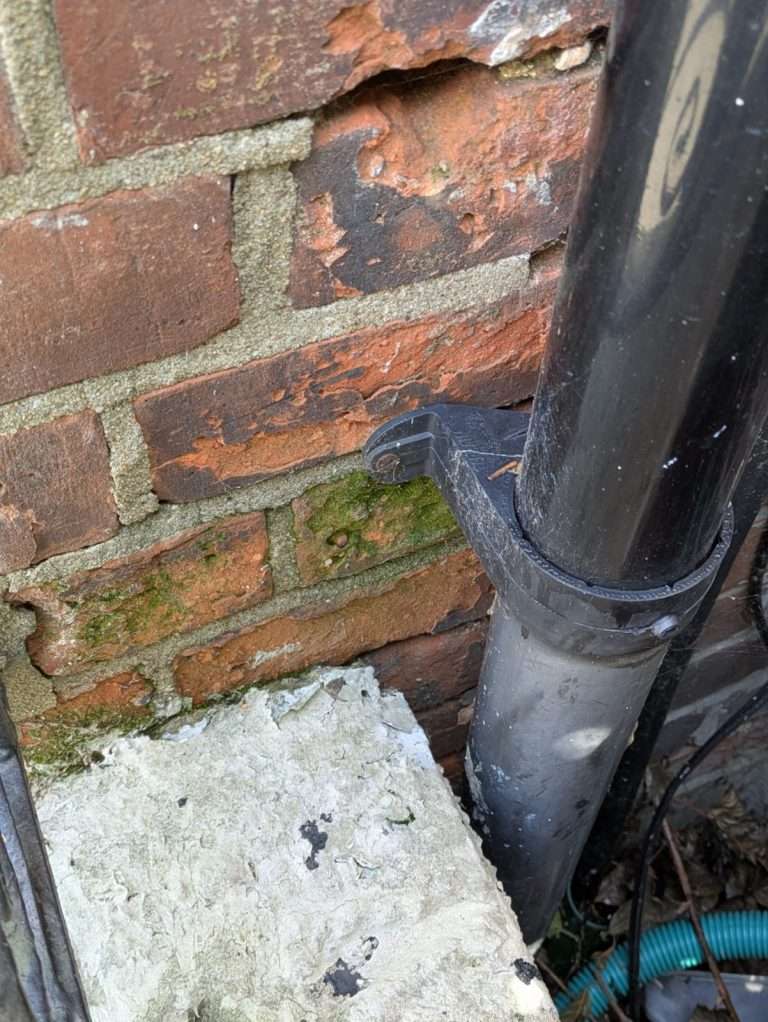
Front bay, Wimbledon SW19
New damp above an older treatment, traced to open joints and damaged brick by a downpipe. Localised tanking repair.
Read the case study →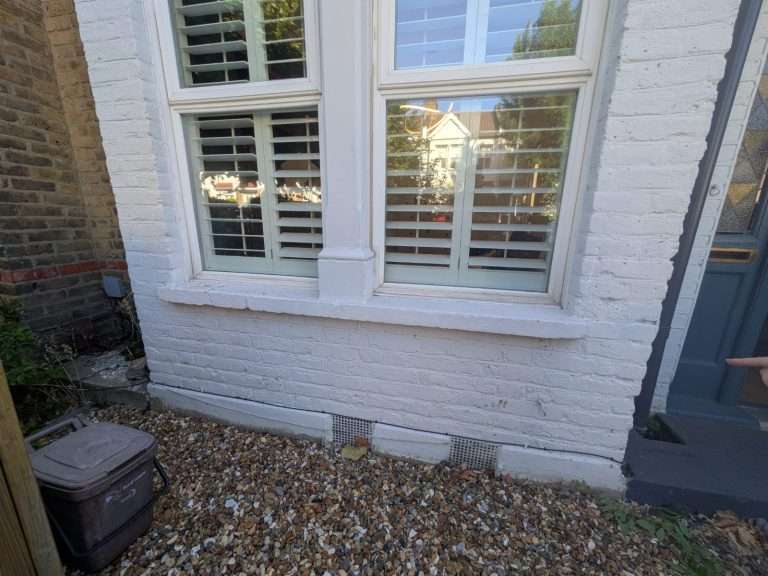
1890s terrace, Raynes Park SW20
Damp from a Level 3 survey traced to a blocked drain, high ground and buried air bricks.
Read the case study →Not sure what is causing your damp?
Damp is easy to misdiagnose. A damp survey by a CSSW and CSRT trained specialist finds the real cause first, so you only pay for work that fixes it. We cover Wimbledon from our London office.
Book a Wimbledon SurveyCall 0300 373 7251- 1. Book online or callPick a time that suits you.
- 2. Surveyor visitsMoisture readings, thermal imaging and a check outside.
- 3. Written reportThe cause, photos and the recommended fix, with no obligation.
Areas we cover around Wimbledon
Nearby local pages:
Wandsworth · Putney · Surbiton · Balham · South London · All locations
Our nearest office: 45 Fitzroy Street, London W1T 6EB. Call 0300 373 7251.
What affects the cost of damp treatment
Every property is different, so we price work after the survey with a fixed written specification. The main factors are the type and cause of the damp, how much wall or floor area is affected, whether plaster needs replacing, access, and the finishes that need reinstating.
Rising damp
A new chemical damp proof course with replastering typically starts from £500 to £800 for a small wall section.
Penetrating damp and condensation
Often the most affordable to fix once the source is found, such as gutter repairs, repointing or improved ventilation.
Basement waterproofing
Systems designed to BS 8102 typically start from £3,500 for a small cellar, depending on size and system type.
Damp proofing Wimbledon: FAQs
Why is my house on Wimbledon Hill damp when it is so high up?
The top of the hill is sand and gravel over clay, so rain soaks in and comes out on the slopes where the two meet. Houses part way down the hill can have water against their walls after wet weather even though they sit well above the valley.
Do houses near South Wimbledon need different damp treatment?
Often, yes. Near the Wandle the water table is higher, so cellars and ground floors see more groundwater. These need waterproofing designed for constant water rather than standard damp proofing above ground.
Can cavity wall insulation cause damp in a 1930s Wimbledon house?
It can, if the insulation was installed in a wall exposed to driving rain or the cavity was bridged. The damp shows on outside walls after wet, windy weather. A survey with moisture readings and a borescope check confirms the cause.
Do you cover Raynes Park and Colliers Wood?
Yes. We cover Wimbledon Village, Wimbledon Park, South Wimbledon, Raynes Park, Colliers Wood and the surrounding SW19 and SW20 streets.
Do you work on listed and conservation area homes in Wimbledon?
Yes. Older homes in Wimbledon Village often need breathable lime based treatments that suit solid walls. Listed buildings usually need consent for changes, so we flag anything that may need it in our report.
Get the cause of your damp found and fixed
Non-invasive survey with a clear written report. No obligation.
Book a SurveyCall 0300 373 7251